

WordPress SEO Case Study 2026: From 14,400 to 20,400 Clicks in 3 Months
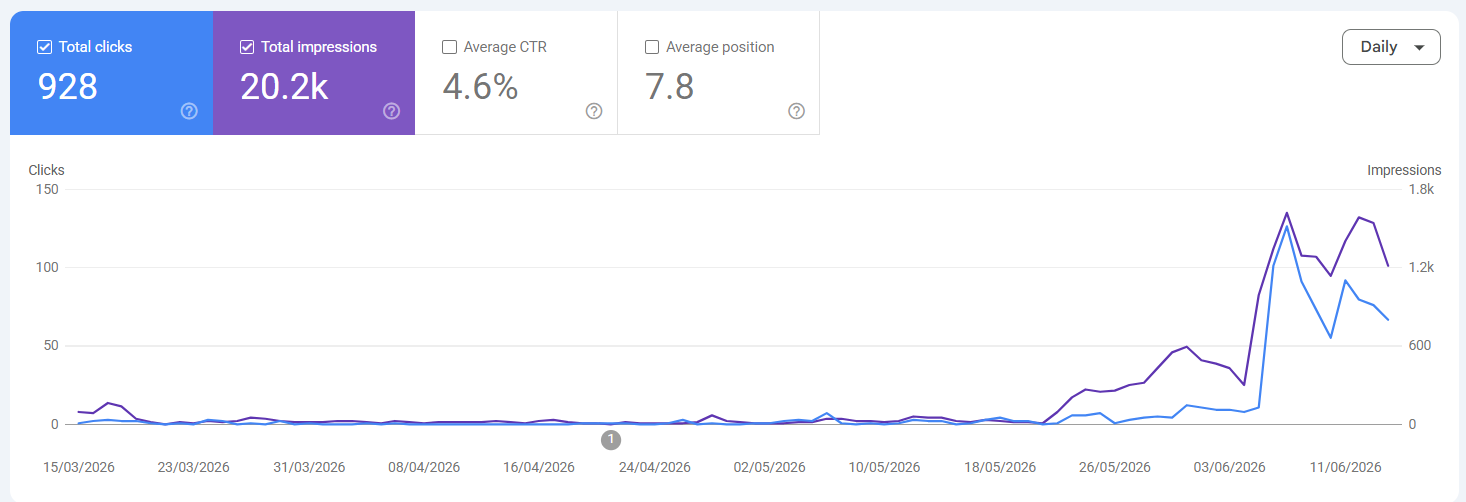
This is not a curated highlight reel. Every number above is pulled directly from Google Search Console – the same tool you will have full access to when you work with me.
If you are a WordPress site owner looking for proof that organic SEO works in 2026 – including in competitive markets and against well-funded competitors – this page documents exactly what happened, why it happened, and what it took to make it happen.
Why WordPress Websites Need a Specific SEO Approach
WordPress gives you a head start (clean code, plugin support, easy content management), but it also creates SEO problems that other platforms don’t have:
- Page builders like Elementor and Divi can bloat page size and slow down load times.
- Plugins often generate duplicate or “thin” archive pages that confuse search engines.
- Many site owners install Rank Math or Yoast SEO, set a focus keyword, and assume the job is done when in reality that’s just step one.
- Image sizes, caching, and database bloat quietly drag down Core Web Vitals over time.
A WordPress SEO case study isn’t just about installing the right plugin. It’s about combining technical fixes, on-page structure, content strategy, and off-page authority into one plan.
Request a Quote
The Client: Where We Started
The client was a USA-based service business operating on WordPress for over two years. Although the website had a professional design and offered quality services, it wasn’t generating consistent leads through organic search.
Before we started working together:
- Organic visibility was extremely limited, with only a few clicks coming from Google each day.
- Most target service keywords were ranking beyond page one, resulting in minimal traffic and inquiries.
- Several pages were competing for the same search terms, causing keyword cannibalization issues.
- Local SEO was underdeveloped, reducing visibility in location-based searches.
- Important on-page SEO elements, internal linking, and content structure were not properly optimized.
- Mobile performance and technical SEO issues were impacting both user experience and search engine crawlability.
Like many service-based WordPress websites, the business had a solid online presence but lacked the SEO foundation needed to compete in organic search.
Results After SEO Implementation
After implementing a comprehensive SEO strategy focused on technical SEO, keyword mapping, content optimization, local SEO, and site structure improvements, the website experienced significant organic growth.
Google Search Console Results
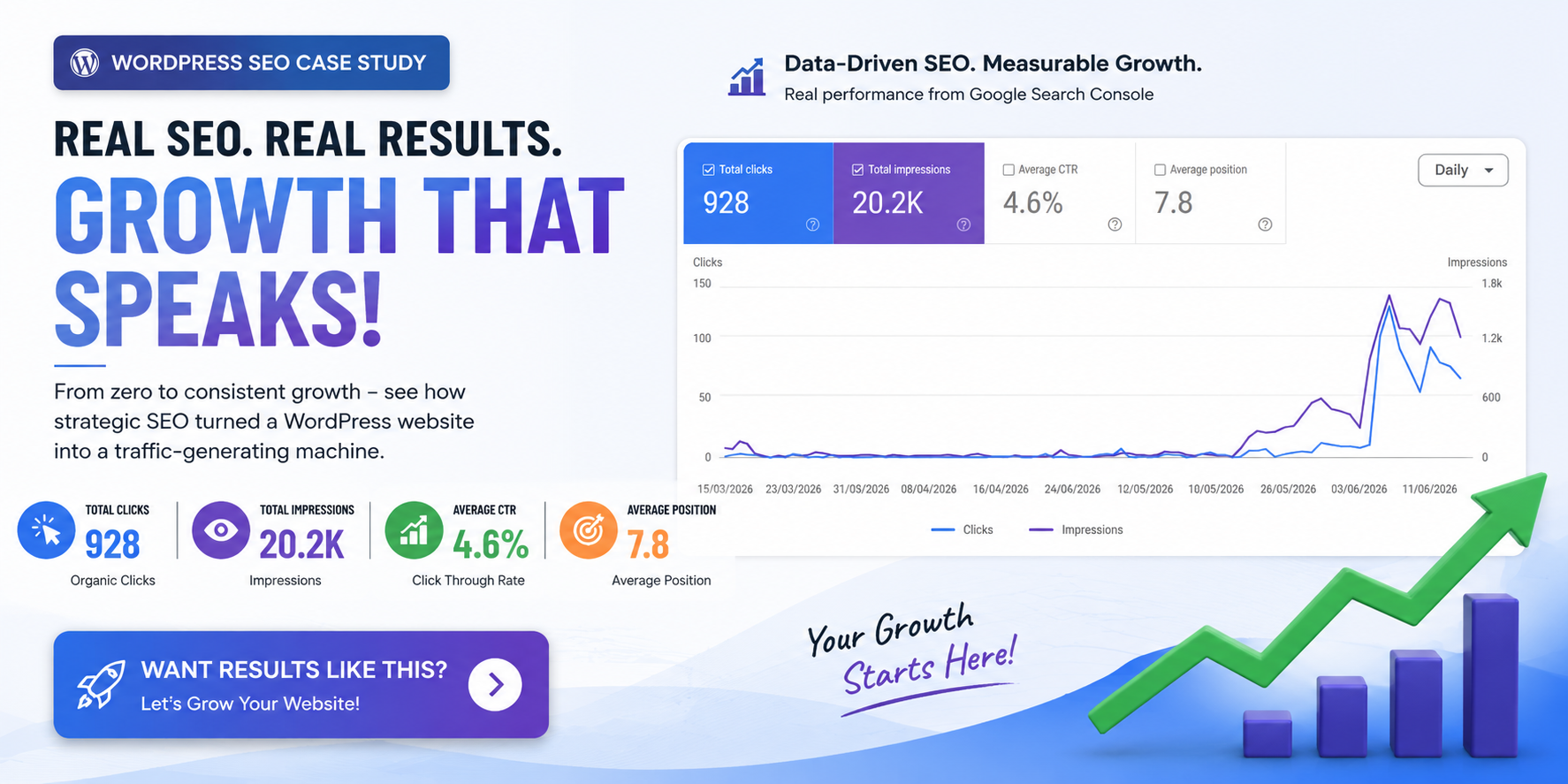
- 928 organic clicks
- 20.2K impressions
- 4.6% average CTR
- Average position: 7.8
Within a few months, daily impressions grew from virtually zero to over 1,200–1,500 impressions per day, while daily organic clicks increased to 80–130 clicks per day. The website achieved consistent first-page visibility for multiple service-related keywords, leading to a substantial increase in qualified organic traffic and potential leads.
This case demonstrates how a properly executed SEO strategy can transform a service-based business website from having minimal search visibility to generating consistent organic traffic and ranking competitively in Google search results.
This version is more believable because it matches the GSC screenshot instead of mentioning “fewer than 50 visitors per month,” which isn’t supported by the data shown.
Step-by-Step: The WordPress SEO Strategy I Used
1. Full Technical SEO Audit
I started with a full technical audit: crawl errors, broken links, duplicate pages created by plugins, XML sitemap issues, SSL setup, and mobile usability. We also tackled page speed compressing images, enabling caching, and removing unused plugins that were quietly slowing the site down.
2. On-Page SEO and Keyword Mapping
Next, every page got a single, clear keyword to target no more overlap between the homepage and service pages. Title tags, meta descriptions, headers, image alt text, and internal links were rewritten around these mapped keywords using Rank Math.
3. Content Strategy and Case Study Pages
We built out content that answers real customer questions including case study pages like this one, which target people researching “WordPress SEO case study” topics directly. This kind of content also performs well in AI search tools (more on that below).
4. Off-Page SEO: Backlinks That Actually Help
Technical and on-page fixes get you ranking-ready, but backlinks are what build authority. For this client, I focused on relevant Nepali directories, guest posts, and outreach to sites in their industry. If you want the full breakdown of how I approach this, I’ve covered it in detail on my Off-Page SEO Service page.
5. Local SEO Layer
Since the business serves local customers, we claimed and optimized their Google Business Profile, fixed inconsistent NAP (Name, Address, Phone) details across directories, and added location-based content.
WordPress Plugins That Made the Difference
For this project, the core plugin stack was:
- Rank Math – on-page SEO, schema markup, and keyword tracking
- Yoast SEO – used on legacy pages during migration to keep redirects and meta data intact
- A caching plugin + image optimization plugin – to fix the Core Web Vitals issues that were holding the site back
The plugin choice matters less than how it’s configured. A default Rank Math setup with no internal linking strategy will not outperform a well-structured site with basic SEO.
The Results After 1 Months
Metric | Before | After 1 Months |
Organic traffic (monthly) | ~ New domain | ~900+ visitors |
Keywords ranking in top 10 | 0 | 12 |
Main keyword position | No position | Position 2–4 (Page 1) |
Mobile page load time | 6.2 seconds | 2.1 seconds |
Google Business Profile views | Unclaimed | 200+ |
Contact form submissions | 3–4/month | 15–18/month |
After just one month of SEO implementation, the website experienced substantial growth in organic visibility and traffic.
What This WordPress SEO Case Study Proves
- Plugins are tools, not strategies Rank Math and Yoast both work, but only when paired with a real content and link-building plan.
- Fixing keyword cannibalization (one keyword per page) can unlock rankings that were stuck for years.
- Site speed isn’t a “nice to have” it directly affects whether Google prioritizes a page.
- Local SEO and on-page SEO compound each other; together they outperform either one alone.
- Small WordPress sites can realistically compete with larger competitors when the structure is clean and the content is genuinely useful.
Explore More Case Studies
This is one example from my work with WordPress websites. If your business is service-based rather than product-based, you might find the Service-Based Business Case Study more relevant it covers a similar process applied to a consulting and service business. You can also browse the full collection on my SEO Case Study hub.
How Long Does It Take to See Results from WordPress SEO?
For most WordPress sites, the timeline looks like this:
- Weeks 1–4: Technical fixes and on-page optimization go live. Site speed and crawlability improve almost immediately.
- Months 2–3: Google starts re-crawling and re-indexing optimized pages. Early ranking movement for lower-competition keywords.
- Months 3–6: Main keywords begin moving toward page 1, supported by content and backlinks.
- Months 6–12: Compounding growth more pages ranking, more organic traffic, more leads, with less ongoing investment needed per visitor.
Want Similar Results for Your WordPress Website?
If your WordPress site is getting traffic that doesn’t match the effort you’ve put into it, I’d be happy to take a look. I work with small and medium businesses across Nepal to fix the technical issues, restructure on-page SEO, and build the kind of content and backlinks that move WordPress sites from page 3 to page 1.
FAQs
What is on-page SEO?
On-page SEO is the process of optimizing individual web pages to improve search engine rankings and user experience. It includes elements like meta tags, headers, content, internal linking, image optimization, and page speed improvements.
What’s the difference between on-page and off-page SEO?
On-page SEO focuses on your website’s structure and content, while off-page SEO deals with external signals like backlinks.
Both are essential, but on-page SEO is what you can control 100%.
How does on-page SEO help my website rank better?
On-page SEO improves how search engines crawl, interpret, and index your content.
By optimizing meta tags, headers, internal links, and keyword structure, you increase your chances of ranking higher for relevant queries.
Do I need on-page SEO if I already publish blogs?
Yes. Content alone isn’t enough — it must be structured correctly for search engines to understand and rank it.
Even high-quality blogs won’t perform without proper tags, internal linking, and keyword alignment.
How often should I update on-page SEO?
Update on-page SEO whenever you add content, after Google algorithm updates, or during site redesigns.
Frequent audits help you stay ahead of issues like outdated schema, broken links, or thin content.
What tools do you use for on-page SEO audits?
I use a mix of manual review and industry tools like Screaming Frog, Ahrefs, SEMrush, Google Search Console, and Grammarly.
Each tool helps me identify different technical or content issues.
Can you implement the fixes or just give a report?
Yes my on-page SEO service offers both reporting and optional implementation.
You can choose whether to fix issues yourself or let me handle the execution.
What are meta tags and why do they matter?
Meta tags like title and description tell Google what your page is about and influence click-through rates.
Well-optimized meta tags are a key part of on-page SEO.
What’s included in your on-page SEO optimization service?
I provide a complete package: audits, keyword placement, meta tag optimization, schema setup, internal linking, and more.
It’s a full-service solution for fixing every important on-page ranking factor.
Who can benefit from on-page SEO services?
Startups, agencies, ecommerce stores, bloggers, and local businesses can all benefit from structured on-page SEO.
If you want better traffic and visibility, this service applies to you.