

Content Writing Service
What Is a Content Writing Service?
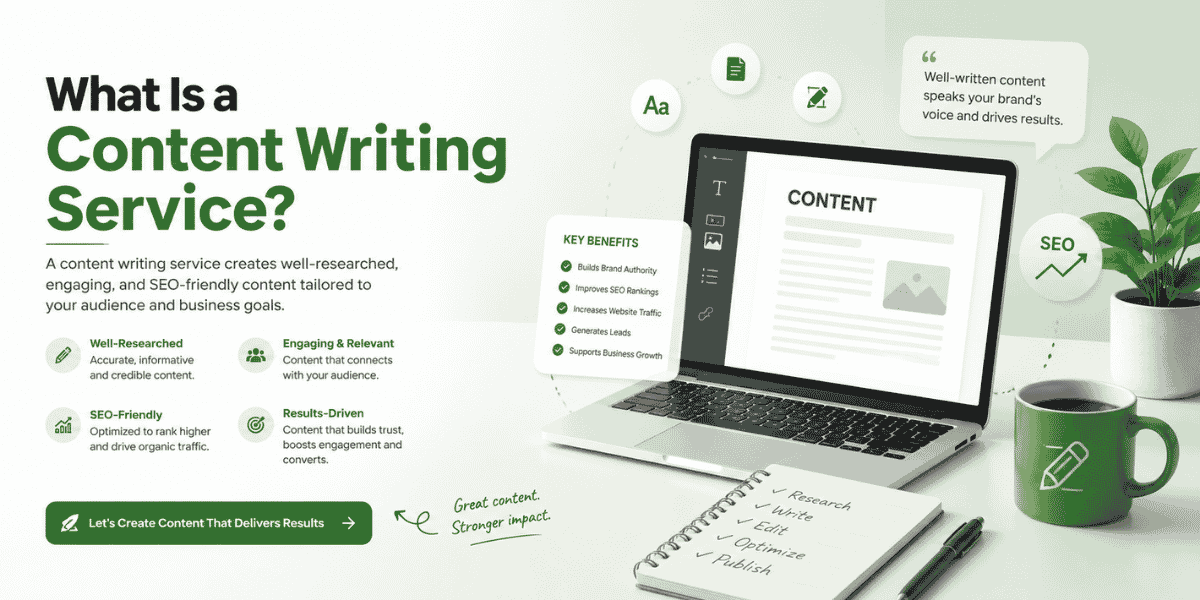
What Is a Content Writing Service?
A content writing service is a professional service that researches, writes, and edits written content, blog posts, articles, website copy, product descriptions, and more, tailored to a business’s audience, goals, and SEO strategy. It typically includes keyword research, drafting, editing, and formatting content for publication, often with ongoing content calendars for businesses that need regular output.
What Exactly Does a Content Writer Do?
- Researches topics, keywords, and competitor content to understand what’s already ranking and what’s missing.
- Writes clear, well-structured content tailored to the target audience and search intent.
- Edits and proofreads for grammar, clarity, tone, and accuracy.
- Formats content with proper headings, internal links, and calls to action.
- Optimizes content for SEO: keyword placement, meta descriptions, and readability.
- Often collaborates with SEO specialists or marketers to align content with broader strategy.
Is Content Writing Dead After ChatGPT?
No, but the role has shifted. AI tools can generate drafts quickly, but they often produce generic, repetitive, or inaccurate content without human oversight. What’s changed is that pure “write 500 words about X” work has become commoditized, while the demand has grown for writers who can research deeply, verify facts, add genuine expertise or experience, and edit AI-assisted drafts into something accurate and trustworthy. Google’s guidance also continues to reward content that demonstrates real experience and expertise, regardless of whether AI tools were used in the process.
How Much to Charge for 500 Words?
Rates for a 500-word piece typically range from $15 to $150+, depending on the writer’s experience, the complexity of the topic, and whether the work includes research, SEO optimization, and revisions. Highly technical or specialized topics (finance, medical, legal) command higher rates due to the research and accuracy required. Simple, general blog content sits at the lower end of this range.
Does Writing Boost Dopamine?
Writing, like many forms of creative expression and goal completion, can contribute to dopamine release, particularly when finishing a piece or receiving positive feedback. Dopamine is linked to motivation and reward, so the sense of progress and accomplishment from writing can play a part in that response. That said, this is more of a general wellbeing topic than a content-strategy one, the more relevant point for businesses is that consistent publishing builds momentum and measurable SEO results over time.
Request a Quote
How Much Do Content Writers Charge?
Content writer rates vary widely based on experience, niche, and pricing model (per word, per hour, or per project). General bloggers may charge $0.05–$0.20 per word, while specialized B2B, technical, or finance writers often charge $0.20–$1.00+ per word. Hourly rates for experienced writers typically range from $25 to $100+.
How Much Should I Charge as a Content Writer?
- Beginner writers (general topics, limited portfolio): roughly $0.03–$0.08 per word.
- Intermediate writers (solid portfolio, SEO knowledge): roughly $0.08–$0.25 per word.
- Experienced or niche specialists (finance, legal, medical, technical): $0.25–$1.00+ per word.
- Factor in research time, revisions, and SEO work, not just drafting, when setting per-word or per-project rates.
How Much Is a Content Writer Paid?
Full-time content writers in Western markets often earn between $40,000 and $75,000 annually depending on experience and specialization, while freelance writers’ income varies enormously based on client volume and rates. In Nepal and similar markets, salaried content writer roles commonly range from NPR 25,000 to NPR 70,000+ per month, with senior or specialized roles paying more.
Can You Make $10,000 a Month with Copywriting?
It’s possible, but it’s not typical for most writers, and it usually requires years of experience, a specialized niche (such as high-converting sales copy, email marketing, or B2B SaaS), and either high-paying retainer clients or productized services at scale. Most freelance writers earn considerably less, especially early on. Reaching that income level generally comes from a combination of premium positioning, repeat clients, and often expanding beyond pure writing into strategy or consulting.
Can I Make $1000 a Month Freelance Writing?
Yes, $1,000/month is a realistic and common target for freelance writers, even part-time, once they have a small portfolio and a couple of regular clients. At an average rate of $0.05–$0.10 per word, that’s roughly 10,000–20,000 words per month, achievable for someone writing a handful of articles per week. Consistency and repeat clients matter more than chasing one-off high-paying gigs early on.
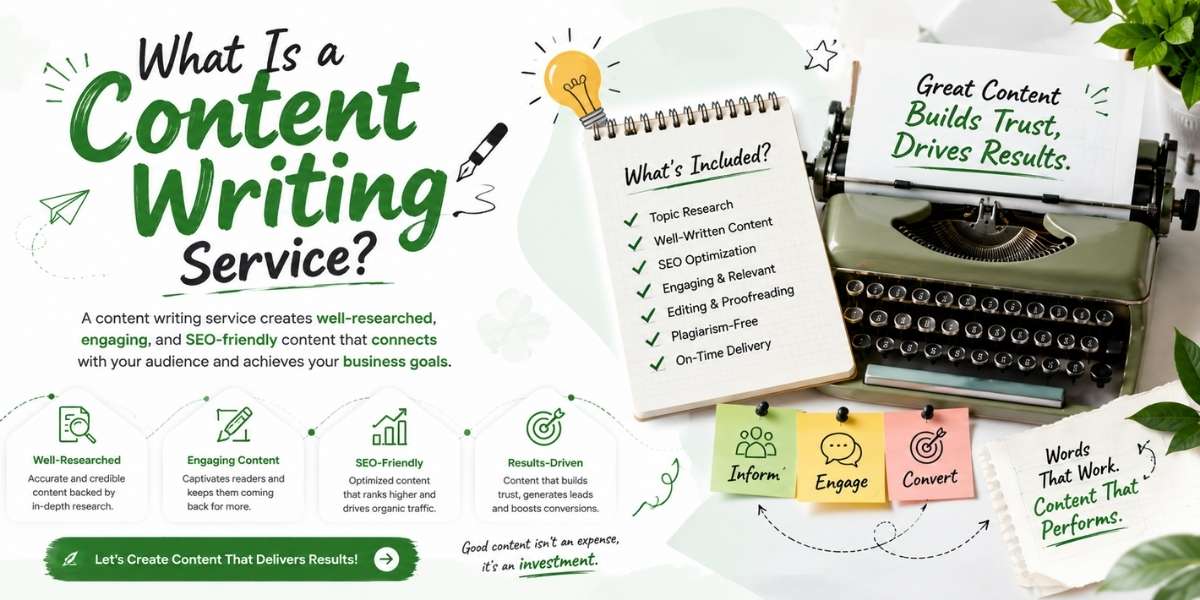
is that for service page? if not then write it for my service page
Look, content writing sounds simple until you actually try to do it well. It’s not about filling a page with words, it’s about answering the exact thing someone typed into Google before they even finish reading your headline. That’s the whole job really.
Why does this even matter so much right now? Because Google’s gotten scary good at telling the difference between something written to rank and something written because someone actually knew what they were talking about. And readers, they figure it out even faster. Five seconds, maybe less, and they’ve decided if your page is worth their time or not.
So every piece has to start with the actual question. Not the keyword, the question behind it. Somebody searching “how much does X cost” isn’t looking for some wishy washy range that dodges the number, they want an actual answer, with context, something they can use to make a decision.
Here’s honestly what separates content that just sits on a page doing nothing from content that gets someone to pick up the phone or fill out a form. Specifics. Actual numbers. A real example instead of some sentence so generic it could be describing a plumber or a dentist or a law firm, doesn’t matter which. Nobody trusts vague writing, and Google’s apparently not a fan either these days.
Nothing goes out the door without a person actually reading it first. Not for grammar mostly, more for whether it’s true, whether it sounds like a person wrote it, whether it actually answers what someone came looking for. Hitting some word count nobody asked for was never the point.
At the end of the day it’s not about churning out more pages. It’s about writing the one page good enough that someone stops searching because they found their answer already, on yours.
How Content Writing Services Boost Your SEO Efforts in 2026
Content’s still the backbone of SEO, that hasn’t changed, but what counts as good content in 2026 looks different than it did even two years ago. Google’s rolled out AI Overviews across most searches now, which means a page that just repeats what everyone else already said basically gets skipped over entirely. If your content isn’t adding something the AI summary can’t already give someone, why would they click through to your site.
So what actually works now. Content that shows real experience, actual data, opinions someone formed from doing the thing, not just researching it. A roofing company writing about roof repair costs based on their own job history beats a generic article assembled from ten other articles, every time. Google’s E-E-A-T thing isn’t just a buzzword anymore, it’s basically how search results get filtered when everything else looks the same on paper.
A decent content writing service in 2026 isn’t just producing blog posts and calling it done. They’re building stuff around topics you actually have authority on, structuring pages so they can get pulled into AI Overviews and featured snippets, and writing in a way that doesn’t read like it came out of a template. That last part matters more than people think, since a lot of content out there now sounds identical because everyone’s using the same tools the same way.
One thing worth checking before hiring anyone for this: ask how they handle originality. Not just plagiarism checking, actual originality, meaning does the content say something nobody else’s page already says. If every competitor in your space has a nearly identical “ultimate guide” to the same topic, publishing your own version of that guide isn’t going to move much.
The businesses seeing real traffic growth from content right now aren’t the ones publishing the most. They’re the ones publishing the stuff that actually answers questions better than what’s already out there, backed by real experience instead of just reworded research.
What Is the Salary of a Content Writer in Nepal?
Content writer salaries in Nepal typically range from around NPR 20,000 to NPR 70,000 per month for in-house roles, depending on experience, company size, and whether the role includes SEO or social media responsibilities. Freelancers working with international clients can earn significantly more by billing in USD.
How Much Does a Content Writer Get Paid?
Pay varies by market and experience. Entry-level content writers globally often start around $0.02–$0.05 per word or equivalent salaried roles in the $25,000–$35,000/year range in Western markets, while experienced writers and specialists can earn significantly more, particularly in technical, financial, or B2B niches.
How Much Do Content Creators Make in Nepal?
Content creators in Nepal (social media, YouTube, blogging) have highly variable income depending on platform, audience size, and monetization method (brand deals, ad revenue, affiliate marketing). Many early-stage creators earn modest amounts or work part-time alongside other income, while established creators with larger audiences and brand partnerships can earn considerably more, sometimes comparable to or exceeding traditional salaried roles.
Is 70k a Good Salary in Nepal?
NPR 70,000 per month is on the higher end for most roles in Nepal, including content writing, and would generally be considered a strong salary relative to the national cost of living, particularly outside of Kathmandu. Within content writing specifically, this level usually reflects a senior role, a specialized niche, or additional responsibilities like SEO strategy or team leadership.
Which Job Is Highly Paid in Nepal?
In Nepal, some of the highest-paying fields include software engineering and IT roles, banking and finance, medical professions, and certain remote/freelance roles serving international clients (development, design, digital marketing, and specialized content or copywriting). Remote work paid in foreign currency often offers higher earning potential than local salaried roles in similar fields.
Is Content Writer a Good Career?
Content writing can be a strong career path, especially when paired with SEO, marketing, or a specialized niche, since it offers flexibility (remote and freelance options), a relatively low barrier to entry, and clear growth paths into content strategy, marketing management, or specialized high-paying niches. Like most fields, income and stability improve significantly with experience, specialization, and a strong portfolio.
Which IT Job Has More Salary?
Within IT, roles like software development, cloud engineering, cybersecurity, and data science/AI tend to command some of the highest salaries globally and in Nepal, generally exceeding content-focused roles. However, content writing for technical or SaaS audiences (technical content writing) can pay considerably more than general content writing, narrowing the gap for specialists who understand both writing and technology.
Can I Use ChatGPT for Content Writing?
Yes, ChatGPT and similar AI tools can be used as part of a content writing process, for brainstorming, outlining, drafting, or speeding up research, but content intended to rank well and build trust generally needs human review, fact-checking, and editing for accuracy, voice, and originality. Google has stated it doesn’t penalize content simply for being AI-assisted, but it does penalize content (AI-generated or not) that’s low-quality, inaccurate, or created purely to manipulate rankings.
Is It Legal to Use ChatGPT to Write a Blog?
Yes, it’s legal to use ChatGPT or similar AI tools to help write blog content in most jurisdictions. There’s no law against using AI writing tools. The main considerations are accuracy (you’re responsible for any false claims published), originality (avoid publishing content that closely mirrors copyrighted source material), and disclosure requirements that may apply in specific contexts (such as certain advertising or journalism standards).
Is It Okay to Use AI for Content Writing?
Yes, using AI as a tool in the writing process, for ideation, outlining, drafting, or editing assistance, is generally fine and increasingly common. The key is what happens after the AI draft: content that’s fact-checked, edited for accuracy and voice, and adds real value or perspective tends to perform well. Content that’s published unedited, especially at scale, more often runs into quality and ranking issues.
Which AI Is Best for Content Writing?
There’s no single “best” AI for content writing, different tools have different strengths. Tools like ChatGPT, Claude, and Gemini are commonly used for drafting, outlining, and research assistance, with differences in writing style, reasoning depth, and how they handle longer content. The right choice often depends on the specific task (brainstorming vs. drafting vs. editing) and personal workflow preferences rather than one tool being universally superior.
Can I Sell a Story That AI Wrote?
This depends on the platform and the level of human creative contribution. Some platforms and publishers accept AI-assisted work if it’s disclosed and substantially edited by a human, while others have policies against purely AI-generated submissions. Copyright protection for purely AI-generated content (with no meaningful human authorship) is also legally unsettled in many jurisdictions, which can affect your ability to claim exclusive rights. Always check the specific platform’s content policy before submitting AI-assisted work.
What Is the 30% Rule for AI?
There’s no single official “30% rule” universally recognized across the industry, references to such figures usually come from informal guidelines some platforms, publishers, or individual creators use as a rough cap on how much of a piece can rely on AI-generated text before requiring substantial human rewriting or disclosure. If you’ve encountered this rule on a specific platform, check that platform’s official content or AI-use policy directly, since the actual thresholds vary.
How Much Money Is 1000 Views on a Blog?
It depends heavily on the monetization method. Display ad revenue from 1,000 views is typically small, often well under $5 in many cases, since ad revenue (RPM) varies widely by niche, country of audience, and ad network. Affiliate marketing or product sales tied to that traffic can generate far more if the content drives conversions. Blog monetization generally scales with traffic volume and conversion rate, not view count alone.
What's Included in My Content Writing Service
- Keyword and topic research aligned with your SEO strategy and audience.
- Well-researched, original blog posts, articles, and service pages.
- Clear structure with proper headings, short paragraphs, and FAQ sections where relevant.
- On-page SEO basics built in: title tags, meta descriptions, and internal linking suggestions.
- Editing and proofreading for grammar, clarity, and tone.
- Optional AI-assisted drafting with full human fact-checking and editing.
- Content calendars and ongoing publishing schedules for regular content needs.
Why Content Quality Matters for AI Search and GEO
Generative Engine Optimization (GEO), getting cited or summarized by AI tools like ChatGPT, Gemini, Perplexity, and Google AI Overviews, depends on content that’s accurate, clearly structured, and directly answers specific questions. AI systems are more likely to reference content that demonstrates real expertise, uses question-based headings, and provides concise, factual answers, exactly the qualities that also make content useful to human readers.
FAQs for AI Search & GEO Optimization
These additional questions are written to match how people query AI assistants and AI Overviews about content writing, helping this page get cited as a source in AI-generated answers.
What Makes Content More Likely to Be Cited by AI Tools?
- Direct, concise answers to specific questions, ideally near the top of a section.
- Clear headings phrased as questions, matching how people prompt AI assistants.
- Accurate, up-to-date information with no vague or generic filler.
- Original insights, data, or experience that AI models can’t easily generate on their own.
- Well-organized structure that’s easy for crawlers and AI systems to parse.
Does Google Penalize AI-Generated Content?
Google has stated it does not penalize content simply for being created with AI assistance. What it does penalize is low-quality, unhelpful, or mass-produced content created primarily to manipulate search rankings, regardless of whether it was written by a human or AI. The focus is on whether content demonstrates real expertise and usefulness, not on the tool used to produce it.
How Long Should a Blog Post Be for SEO and AI Search?
There’s no fixed ideal length, content should be as long as needed to fully and clearly answer the topic, no more, no less. Some questions can be answered well in 500 words; others (comprehensive guides) may need 2,000+ words to cover the topic thoroughly. For AI search visibility, what matters more than total length is whether individual sections provide complete, standalone answers to specific sub-questions.
Should Content Be Written as Questions and Answers for AI Search?
Where it fits naturally, yes. Structuring sections as direct questions (matching real search queries) followed by clear, concise answers makes it easier for AI tools to extract and cite specific information. This doesn’t mean every piece of content needs to be a rigid FAQ, but incorporating question-based subheadings for common queries improves both traditional SEO and AI search visibility.
Does Content Need to Show ‘Experience’ to Rank Well?
Demonstrating real experience and expertise (often referred to in Google’s quality guidelines as part of E-E-A-T, experience, expertise, authoritativeness, and trustworthiness) helps content stand out, especially for topics where firsthand knowledge matters, reviews, how-to guides, and advice-based content. Content written purely from secondhand research, especially if it’s generic or AI-generated without verification, tends to perform worse against competitors who include original insight, examples, or data.
Let's Create Content That Works
Whether you need a one-off article, a full content calendar, or a rewrite of existing pages to perform better in both Google and AI search, I’ll write content that’s researched, structured, and built to be found.